
Strength Training: 7 Benefits That Go Far Beyond Building Muscle
When people hear "strength training," they often think of dumbbells, big muscles and gyms full of experienced athletes. Yet strength training is relevant to a much wider audience. Its goal can be to get stronger, move better, improve your body shape, get back into a sports routine, or simply make everyday movements easier.
1. Gaining strength that's useful every day
Climbing stairs, carrying groceries, getting up from a chair or moving an object all require strength. A well-built strength program engages the major muscle groups and aims to gradually increase the body's capacity to produce effort. The educational materials provided for FitFait specifically emphasize structured progression, controlled execution of movements and tracking performance, rather than chasing disorganized exhaustion.
2. Building measurable progress
Muscle adapts when the stimulus evolves. That can mean slightly more resistance, better range of motion, a more controlled movement, or a better-executed set. Progress therefore doesn't necessarily mean adding a lot of weight every session. A simple logbook or tracking system lets you see what's really changing and keeps you from training at random.
3. Improving movement control
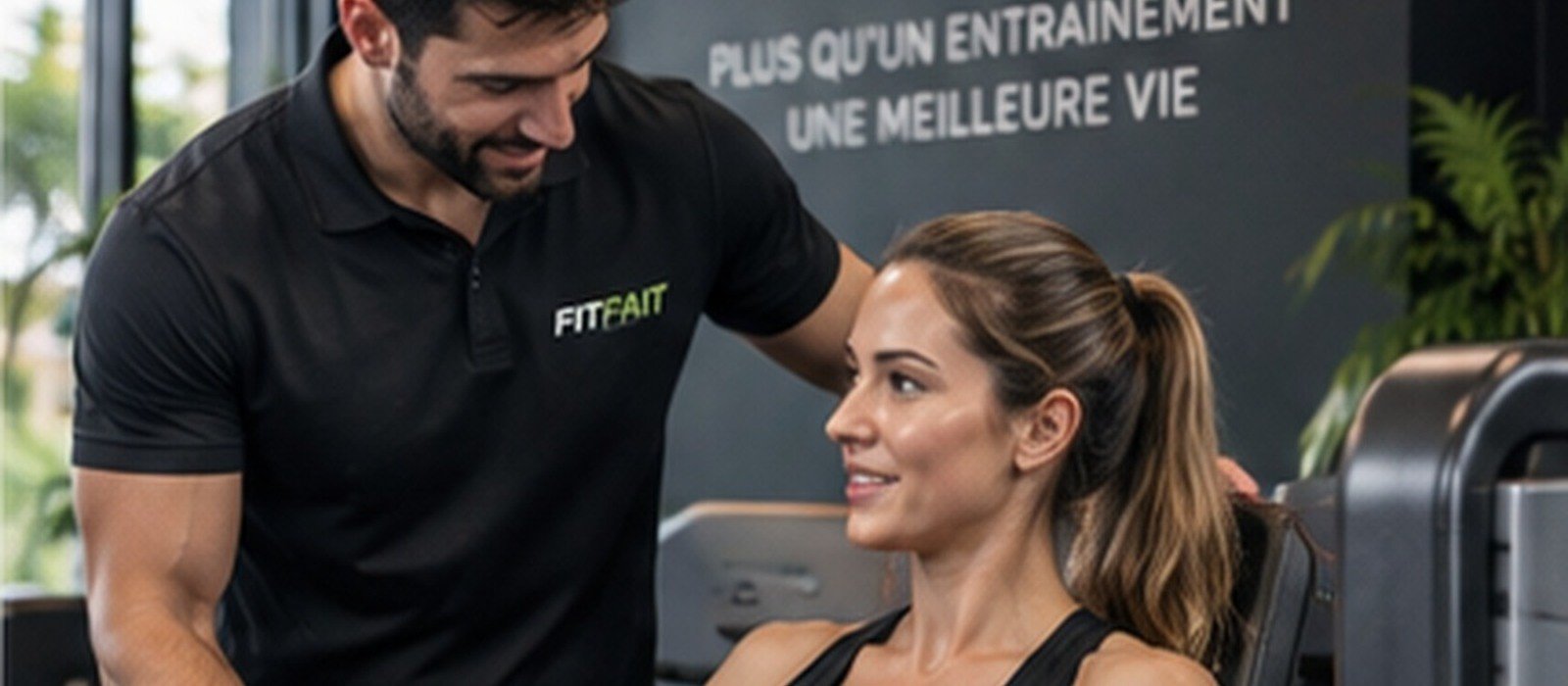
Strength training isn't just about load. Tempo, range of motion, breathing and execution quality all matter. This is especially important for beginners: a slow, clean movement is better than a fast rep done with poor posture. At FitFait, the coach's role is precisely to set up the machines, watch the movement and adjust resistance to the person's level.
4. Supporting a better body composition
Strength training can help preserve or build muscle mass. For a fat-loss goal, this matters because the scale doesn't tell the whole story: two people of the same weight can have very different body compositions. Studies on resistance exercise show it can help reduce fat mass and, importantly, help limit the loss of lean mass when combined with a weight-loss approach.
5. Rebuilding confidence when getting back into sport
Many people give up because they start too hard. A guided, progressive format is often more reassuring: you know what to do, how to do it and why. The no-equipment strength program provided with the project is in fact organized by body zone — upper body, core, lower body — and includes an individualized program with a tracking sheet.
6. Complementing an active life, not replacing it
A strength session, however well designed, doesn't replace all the physical activity you need in a week. The World Health Organization recommends adults combine regular aerobic activity with muscle-strengthening activities. The most useful way to see FitFait is as an anchor point: a structured session for strength, complemented by more walking, more active commuting and less sitting time.
7. Turning limited time into an advantage
The best program is often the one you can actually stick to. A short session reduces friction: less mental overhead, less hesitation, a clear appointment with your coach. Duration isn't a magic promise; what matters is the quality of the stimulus, consistency and progression over time.
Key takeaway
Strength training isn't reserved for bodybuilders, nor is it limited to gaining mass. It can serve strength, fitness, independence and body shape. For a beginner, the goal isn't to do as much as possible on day one, but to start at a suitable level and progress consistently.
FitFait CTA
Want to find out your level and try a guided session? Book a FitFait trial and set your goal with a coach.
Book a trial